Casual Mobile Games
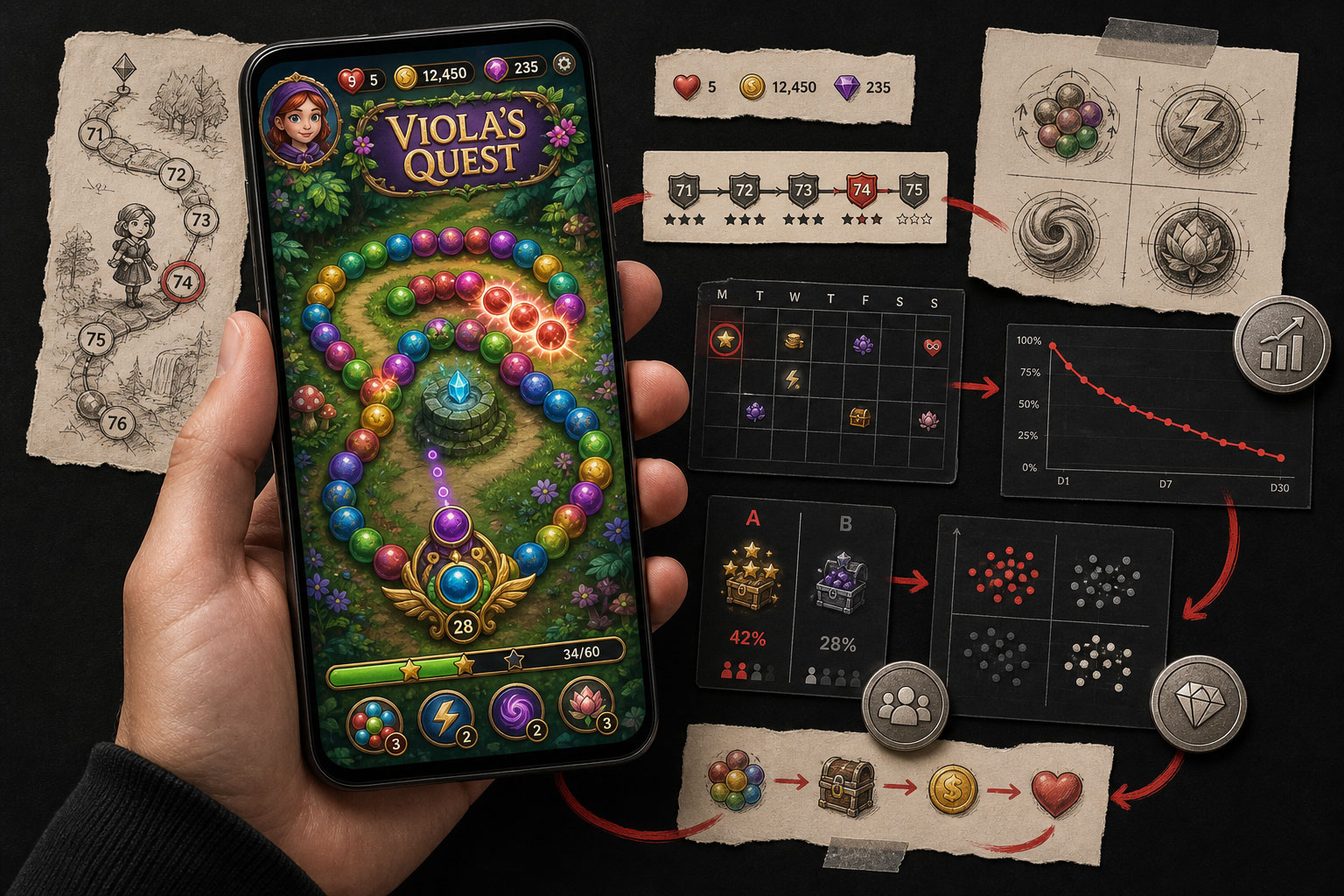
Viola’s Quest
Two Desperados’ marble shooter combines skill-based play with boosters, events and social tribes. It is a useful reference for exploring how progression and fresh content support a focused core mechanic.
Loading
0%

Drop us a line
Mobile game consulting for better gameplay, stronger retention and sustainable growth
A compelling core loop gets players started. Meaningful progression, balanced monetization and well-planned LiveOps give them reasons to stay.
Strike Innovation helps mobile game studios, publishers and brands turn player insights into better product decisions. From validating a new concept to improving a live game, we connect game design, UI/UX and product strategy with the outcomes that matter.
01 / Core Loop & First-Time User Experience
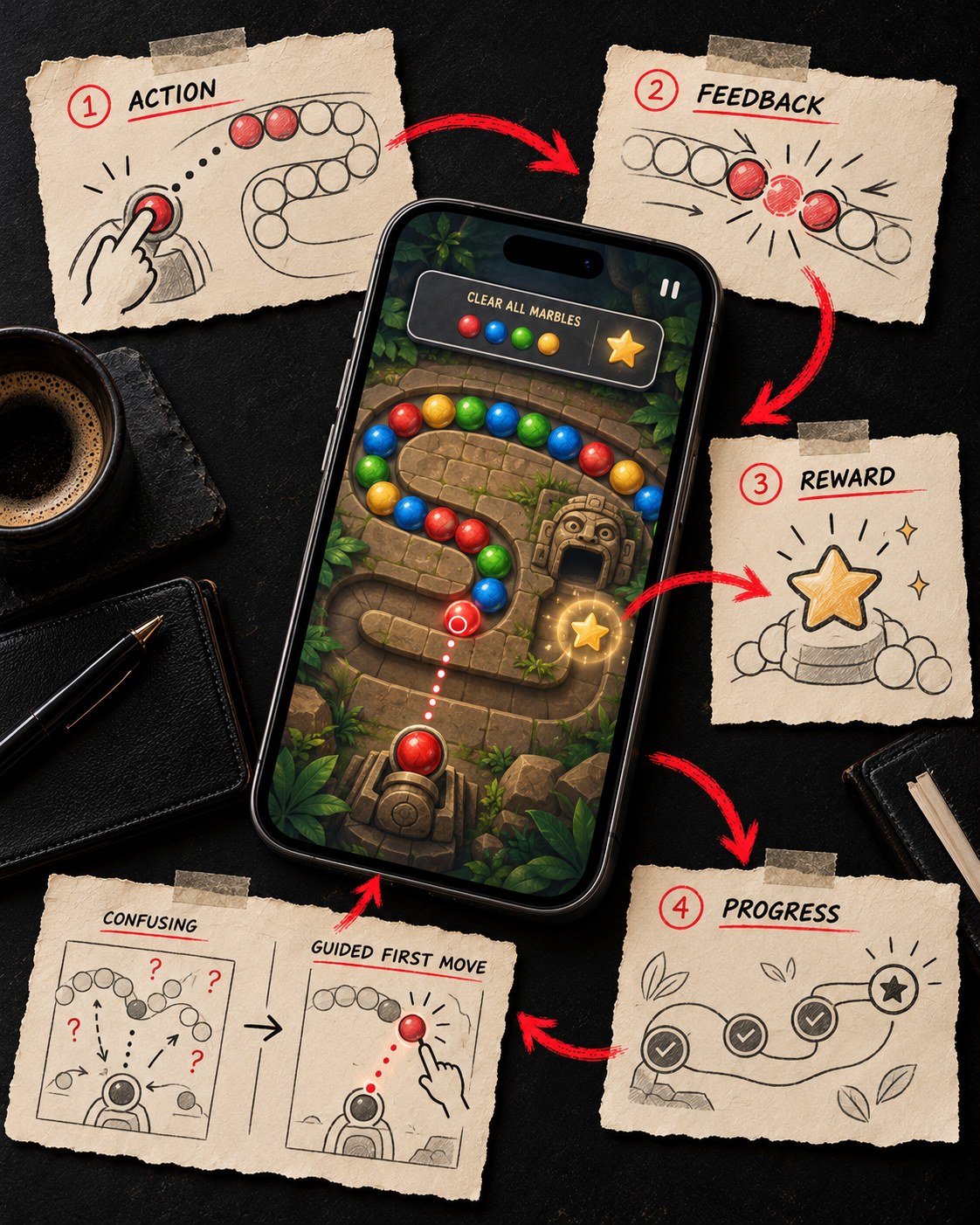
Players can leave before the fun becomes clear. A slow tutorial, unclear objective or weak reward can break the connection between taking an action and wanting to play again. Adding more features rarely fixes a core loop that does not feel rewarding.
We help your team define and refine the action, feedback, reward and progression at the heart of the game. Through journey reviews and playable prototypes, we explore how to teach through play, pace the first challenge and give players an achievable next goal.
What we measure: tutorial completion, time to first meaningful reward, first-session exits and early level completion.
02 / Retention & Progression
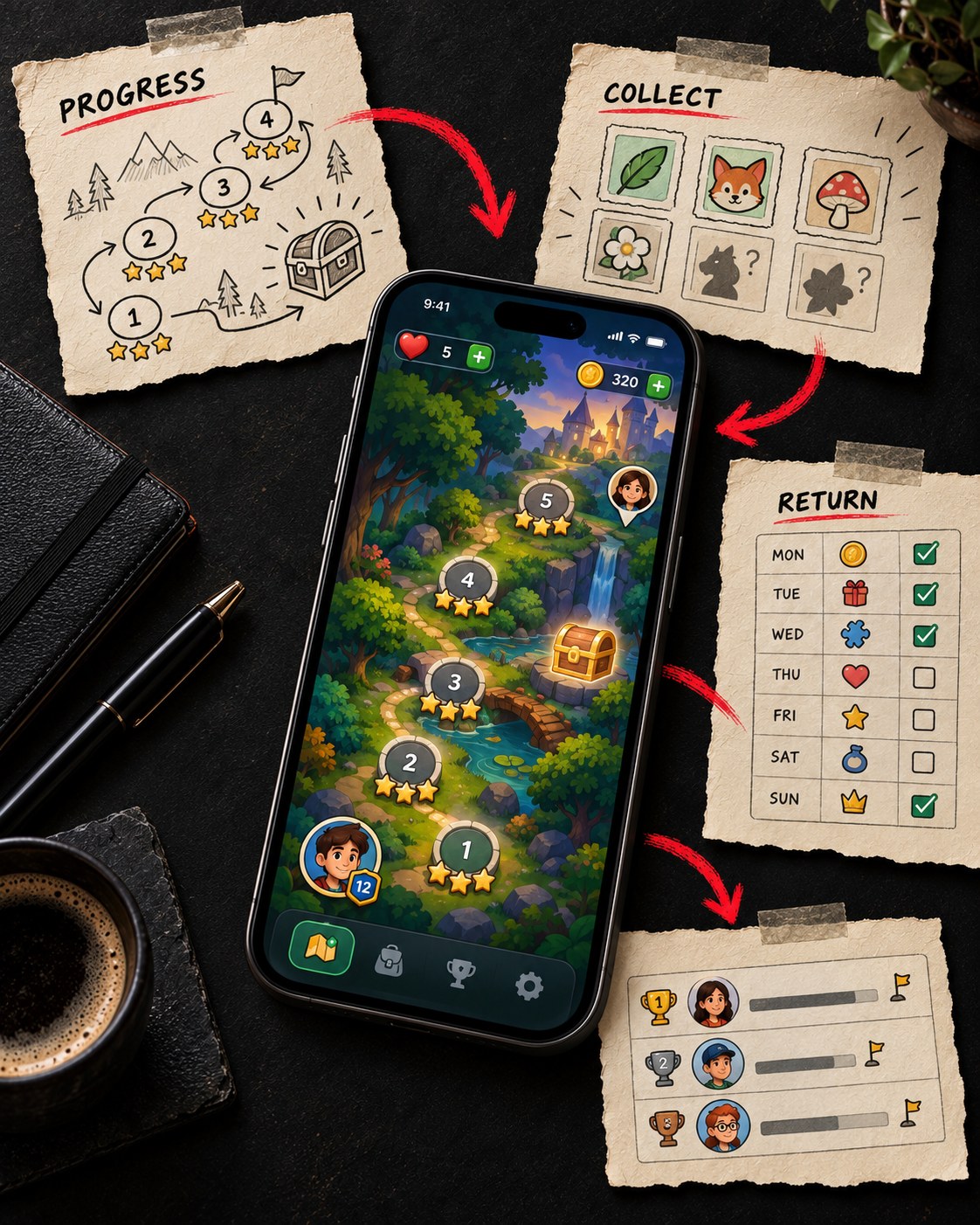
A game can attract installs and still struggle to keep players. Repetitive sessions, sudden difficulty spikes and rewards that lose their meaning can weaken day-one, day-seven and day-thirty retention. Players need to understand both what to do now and what they are working towards.
We design progression and metagame systems around player motivation. That can mean clearer milestones, collections, missions, social goals or a better return journey after a break. We use cohort analysis and playtesting to distinguish onboarding problems from later content fatigue.
The aim is sustained enjoyment and visible progress, with each feature earning its place in the player experience.
03 / Monetization & Game Economy
More offers do not automatically create a healthier business. Poorly timed ads interrupt play, confusing currencies hide value and unbalanced rewards can make progression feel frustrating. A short-term revenue gain may also come with a retention cost.
We help shape a monetization strategy for your genre, audience and stage of growth. In-app purchases (IAP), rewarded advertising (IAA), passes and bundles should fit the core loop. Economy modelling connects how players earn, spend and progress before changes reach a live audience.
We evaluate revenue alongside retention and player feedback, then prioritise experiments with clear success measures.
04 / LiveOps & Social Play
A busy event calendar can still feel repetitive. Overlapping challenges, unclear entry rules and disconnected rewards make it harder for players to choose what matters. Your team also needs a way to operate events without every update becoming a new production bottleneck.
We plan live operations around complementary player goals: a short challenge today, a collection over the week and a seasonal objective over time. We define event journeys, audience segments, reward rules and configuration requirements alongside your product, CRM and engineering teams.
What we measure: event participation, completion, repeat visits and incremental revenue, with retention checked alongside each result.
05 / Validation, Analytics & Product Direction
When retention, monetization and feature requests all compete for attention, teams can end up shipping more without learning what improved the game. The most useful next step may be a better first session, an economy adjustment or a smaller, more focused event.
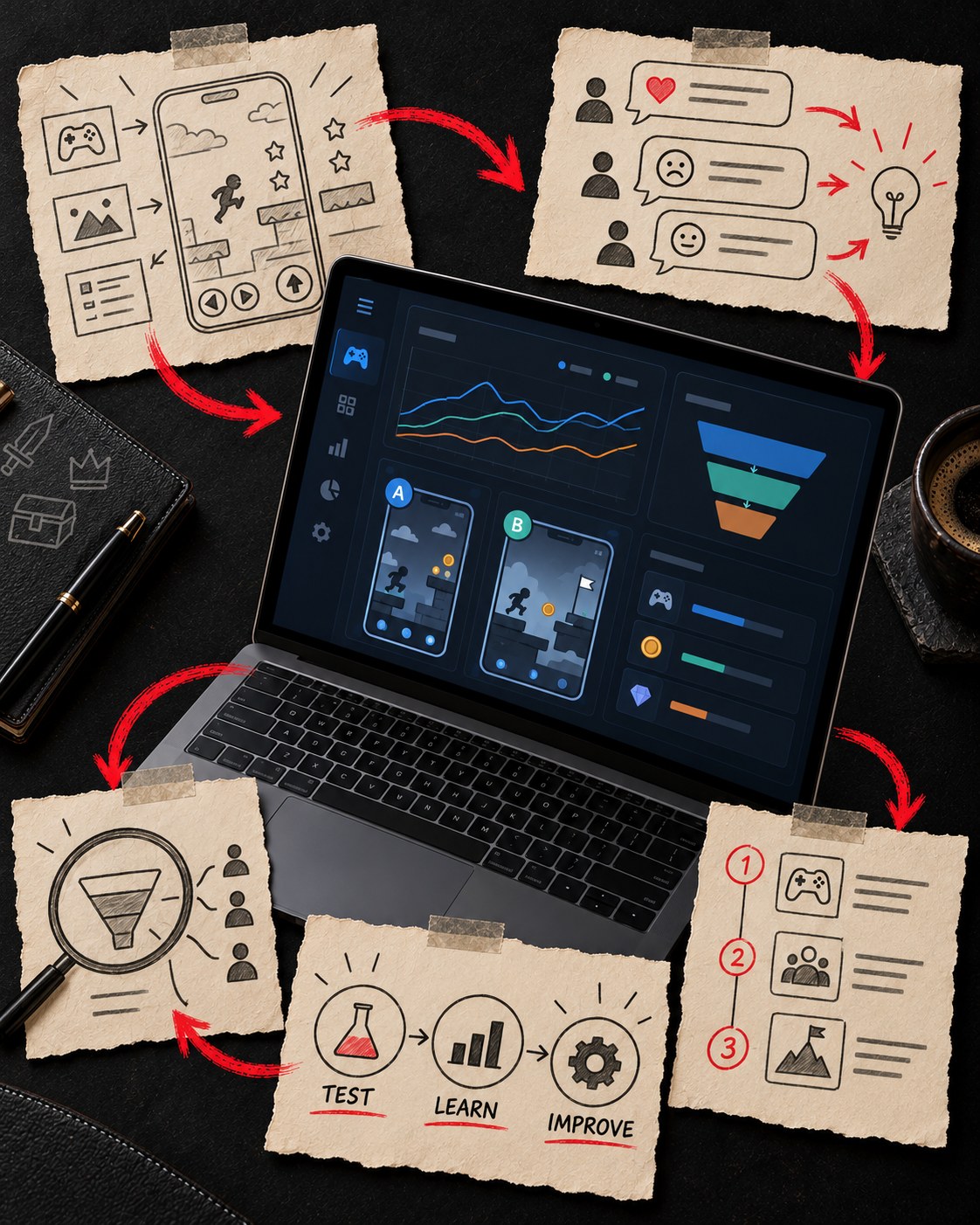
We connect player research with product analytics to identify the friction behind the numbers. From an early concept to a live title, we define hypotheses, prototype solutions and plan tests that make the next investment easier to judge.
Your team receives prioritised opportunities, testable concepts and practical delivery requirements tied to agreed player and business outcomes.
A practical engagement for new concepts, soft launches and live games, focused on the decisions your team needs to make next.
Review the game, player feedback, analytics and commercial goals. Agree where the experience needs to improve.
Choose the highest-value opportunities and define hypotheses, success measures and a focused scope.
Prototype gameplay and player journeys, model rewards and playtest the ideas before committing to production.
Deliver feature specifications, an analytics plan and a prioritised roadmap. Review results and shape the next iteration.
From casual mobile games to branded mini-games and board-style gamification, the product questions connect: is the loop clear, does progression matter and what makes the next session worthwhile?
Casual Mobile Games
Two Desperados’ marble shooter combines skill-based play with boosters, events and social tribes. It is a useful reference for exploring how progression and fresh content support a focused core mechanic.
Branded Mini-Games
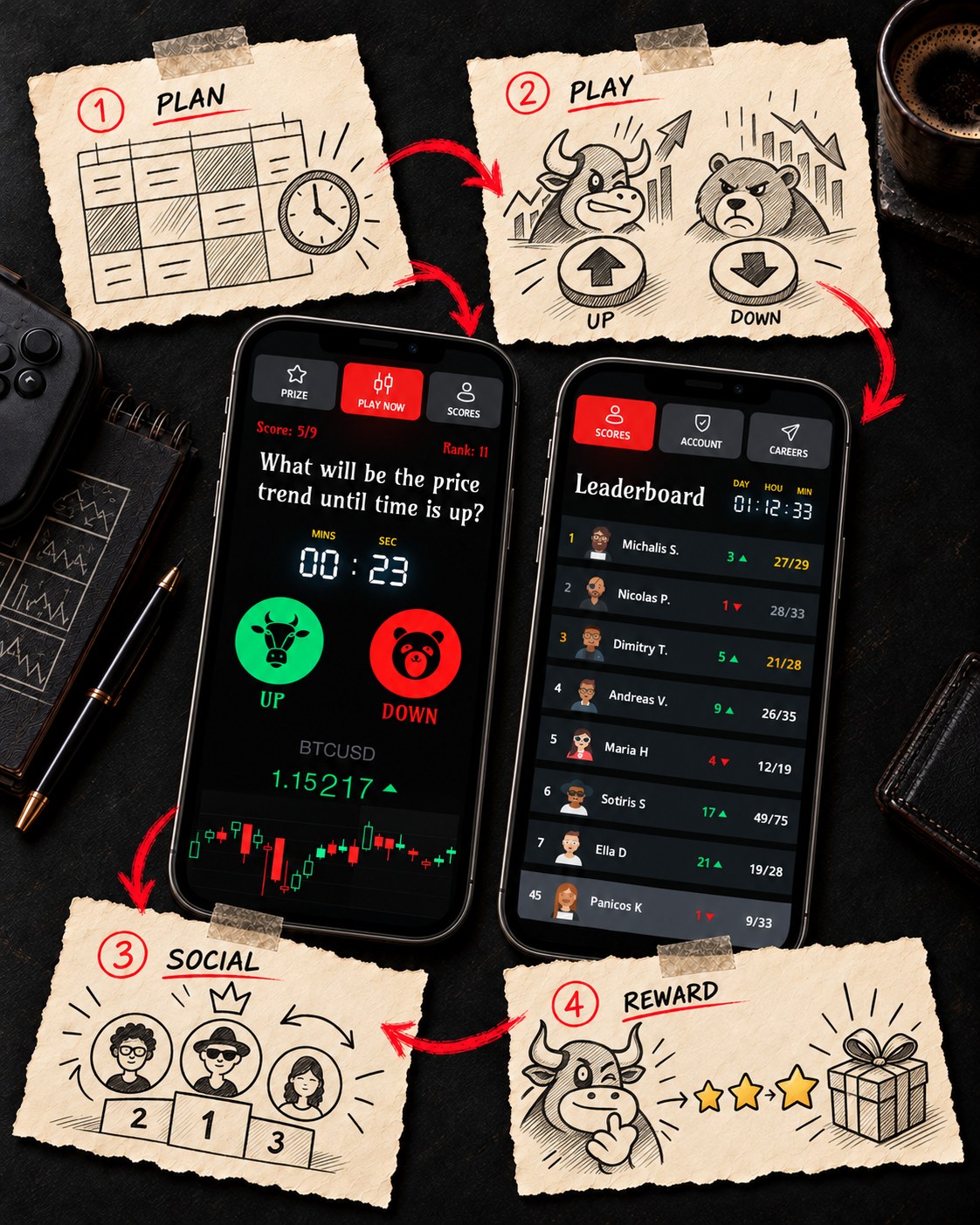
The XM DeadBull concept connects a timed up-or-down choice with immediate feedback, a leaderboard and prizes. It illustrates the journey from understanding a simple action to seeing progress and choosing to play again.
Board-Style Gamification
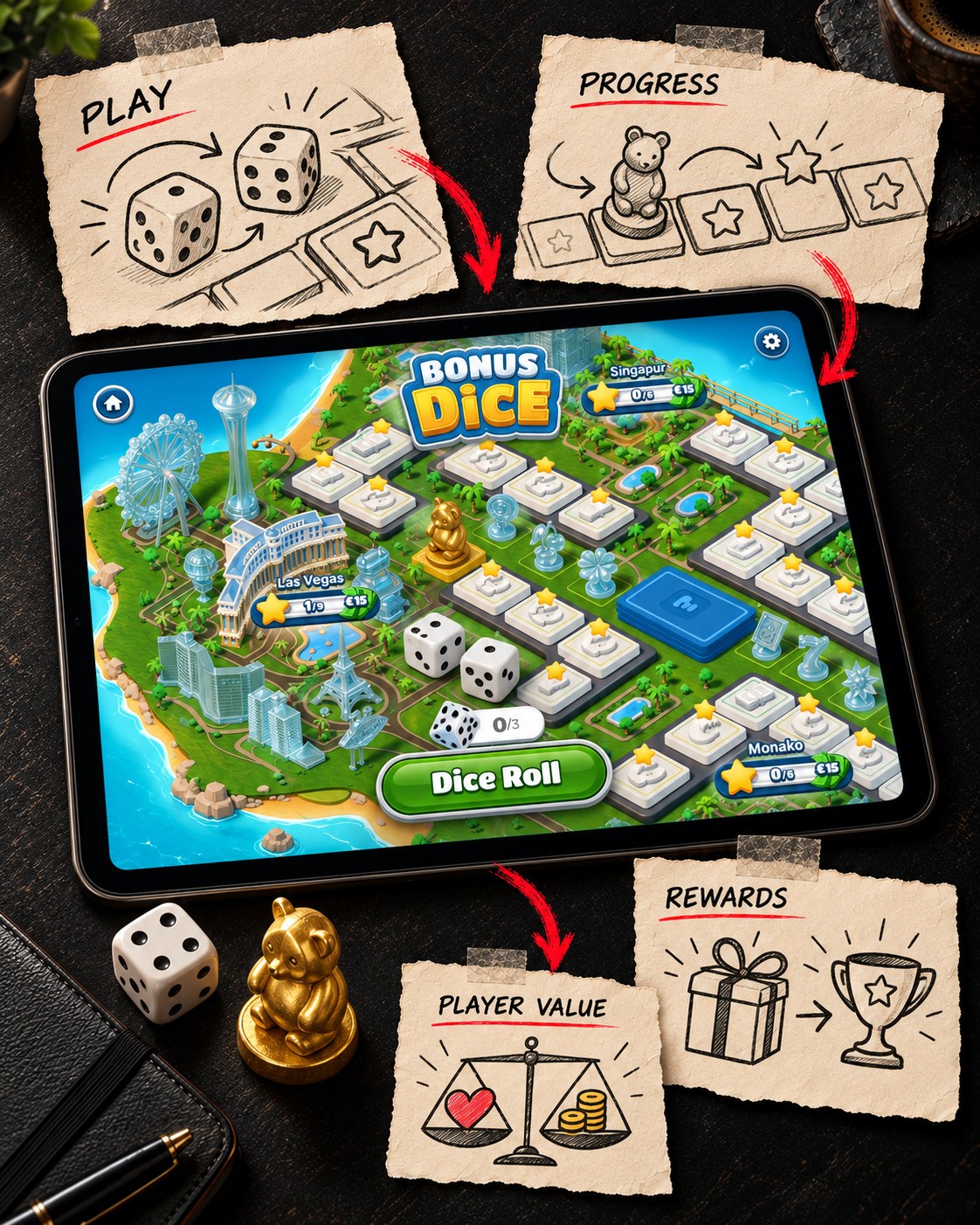
Soft2Bet’s BonusDice offers a board-style reference for visible progression and reward anticipation. Its broader MEGA platform combines casual mechanics, challenges and configurable rewards into an engagement layer.
Planning a new game or improving a live title? Let’s identify the player problem and the product decisions that come next.
We help studios and publishers connect game design, product strategy and UI/UX. An engagement can cover the core loop, first-time user experience, retention, progression, game economy, monetization, LiveOps and analytics. The scope follows the decisions and challenges that matter to your team.
Yes. We review player cohorts, tutorial and level funnels, progression and player feedback to understand where engagement breaks down. We then prioritise changes and testable hypotheses. D1, D7 and D30 retention track how many players return one, seven and thirty days after installing; useful targets depend on the game, audience and acquisition source.
We start with player motivation and the game economy, then assess where in-app purchases, rewarded ads, passes or bundles add clear value. Experiments consider revenue per daily active user (ARPDAU), payer conversion and retention together, so the team can see the tradeoffs of each change.
LiveOps is the ongoing operation and evolution of a live game. We can help with event calendars, seasonal content, tournaments, missions, reward rules, segmentation and operational requirements. Each event should have a clear player purpose and a measurement plan.
Yes. We can help define the audience, core loop and minimum viable experience, build interactive prototypes and organise playtests. For a soft launch, we agree which behaviours and metrics to validate before investing in more content, features or acquisition.
Depending on scope, deliverables can include a game audit, player journey maps, economy models, interactive prototypes, LiveOps concepts, an analytics event plan, experiment priorities and feature specifications. We agree the deliverables and engineering handover requirements at the start.
Whether the challenge is your first session, a retention drop, an unbalanced economy or the next season of content, let’s find the product changes that can move your game forward.


